
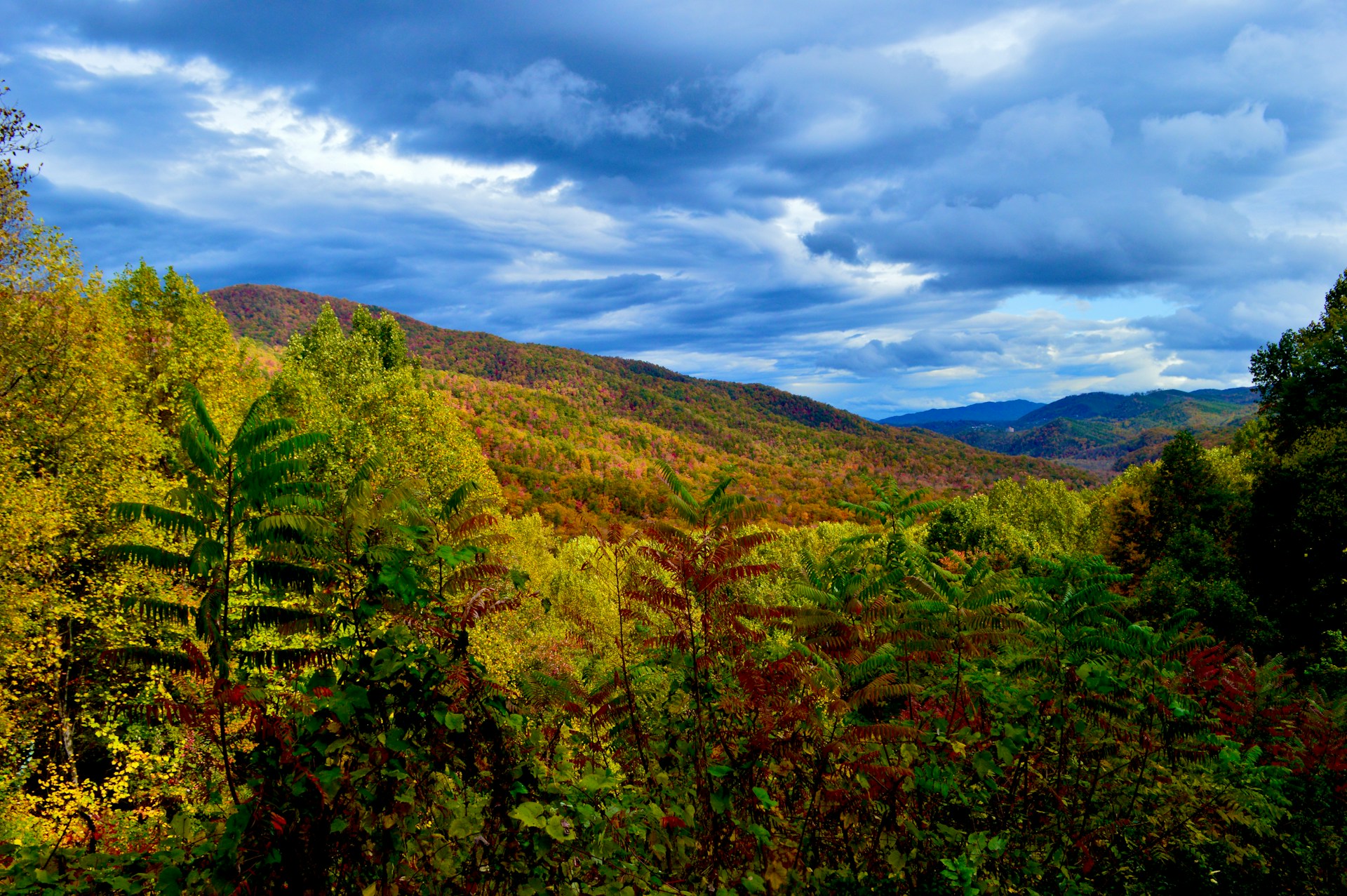
Walk into an old-growth forest and you are immediately humbled by a truth so simple we spend much of our lives forgetting it. Nothing here is the whole. The oak is not the forest. The mycelium beneath your feet is not the forest. The canopy is not the forest. The river moving through it is not the forest. Neither is the wolf, the moss, the fallen log, the soil, the sunlight, or the fungi quietly transforming what has ended into the conditions for what comes next. Each is a part. Each has its own role. Each contributes something the others cannot. And together, something much larger emerges. Not because any one part decided to make it happen. Just because they are all there, doing what they do, in relationship with one another.
Ecology calls this interdependence. But interdependence is just the mechanics. The lived reality is relationship. The fig tree needs the wasp. The wasp needs the fig tree. The mushroom needs the fallen tree, and the forest needs the mushroom to return what the tree once gathered from the earth. The wolf changes the behavior of deer. The behavior of deer changes the vegetation. The vegetation changes the riverbanks. Nothing exists entirely by itself. Nothing understands the whole system from its own position within it. And yet the system itself knows things no single part knows.
There are many parts to the whole. This is not a platitude. It is one of the basic conditions of life. And it is something humans seem to have a particularly difficult time remembering.
Think about a photograph. Light enters through an aperture. Open it wider and more light comes in. Close it down and less enters. The aperture affects what we see and how we see it. Then there is resolution. A photograph is made of countless individual points of information. One pixel tells us almost nothing. Put enough pixels together and an image begins to emerge. But no individual pixel contains the whole image. It contributes to it. That is all it can do. And that is enough.
We can understand human perception through these same mechanics. Each of us has an aperture. Our experiences and education. Our losses and loves. Our disciplines and curiosities. These shape what we notice. They influence what catches our attention and what stays outside our field of view. We also have a kind of resolution. Some things we can see in remarkable detail. Other things are blurry. Sometimes we cannot see them at all. And that is not a flaw. That is just how seeing works.
Two people can stand in the same forest and see very different things. One sees trees. Another sees habitat. Another sees carbon. Another sees beauty. Another sees a watershed. Another sees a place of memory. Another sees a threatened ecosystem. Another sees home. The forest has not changed. The seeing has. And that distinction matters. I can see something clearly without seeing it completely. You can be right about what you see and still be incomplete in what you understand. That is not a failure. It is part of being human. The trouble starts when we forget it. When we start believing our rendering is the whole picture.
Our culture loves the debating forum. You have seen it, whether in person or through a screen. Two podiums. Two voices. A moderator keeping time. An audience watching to see who lands the sharper line, who controls the frame, who appears most certain. Political debates. School competitions. Public spectacles where complex questions get reduced to two positions and a winner is declared. Maybe you watched it on a phone late at night, two people performing confidence while the actual question—the tangled, living, many-angled question—waited somewhere offstage, uninvited.
Notice what the format demands: one speaks, the other waits, the audience picks a side. The third perspective, the fourth perspective, the angle that would have asked a question neither speaker thought to ask—that perspective has no podium. It was never built into the structure. The format itself is a monoculture of voice. Two options. One winner. No room for the angle that completes the picture rather than choosing between its halves.
And we carry this into everything. Into meetings. Into comment sections. Into how we decide who gets called an expert and who does not. We have been trained, subtly and relentlessly, to look for the one person who speaks best and declare them the source. And so we do something no healthy ecosystem would do. We flatten the many into the one.
Competition can be useful. I am not arguing against it. It can push us to work harder, think more carefully, sharpen our skills, pursue excellence. But competition becomes something else when knowledge becomes territory. When we start asking who is the expert, who has the answer, who gets the microphone, who is the authority. When we start asking who gets to speak for the whole.
Someone understands economics, so we assume they understand human behavior. Someone understands science, so we assume they understand meaning. Someone communicates with confidence, and we mistake that confidence for completeness.
But expertise is not universality. The cardiologist does not become the neurologist because she understands the heart. The ecologist does not become the poet because she understands ecosystems. The poet does not become the economist because he understands longing. Experience matters. Expertise matters. Wisdom matters. I am not diminishing any of that. But no one sees everything. No one is the whole. The forest does not ask the oak to be the river. Why do we keep asking people to be what no person can possibly be?
Ecology gives us another lesson here. A monoculture can be efficient. One crop. One system. One set of assumptions. Everything organized around the same thing. Then the conditions change. A disease arrives. A drought comes. Temperatures shift. And the very uniformity that made the system efficient is what makes it fragile. Healthy ecosystems tend to have variety. Different species occupy different niches. Some cooperate. Some compete. Some support one another without ever directly interacting. Diversity is not just something nice to have. It creates resilience. It is resilience.
The same is true of ideas. When everyone in a conversation sees the same thing, we may experience agreement. But agreement is not the same as understanding. Sometimes what a conversation needs most is not another person who agrees. It needs someone who sees something the rest of us cannot yet see. That person is not necessarily there to challenge the conversation. They may be there to complete it.
We have all been in conversations with thoughtful, intelligent people wrestling honestly with difficult questions, only to feel something missing. It was not a lack of intelligence or effort. It was a missing angle. There was another perspective that could have changed the shape of the conversation. Not necessarily overturned it. Not necessarily proven anyone wrong. Just widened it. What would that person notice? What would they question? What might the rest of us understand differently because they were there? The conversation would be better for the people having it. Better for the question itself, which deserves to be held from more than one angle before we decide what it means.
The missing perspective is not always a correction. Sometimes it is just another part of the picture. And that distinction matters. The goal is not to find the person who is right and then dismiss everyone else. The goal is to make the picture larger.
A forest does not have a CEO. A wetland does not have a strategic plan. A coral reef does not have someone sitting in an office deciding what every organism should do. And yet these systems have remarkable intelligence. The intelligence is not located in one place. It exists in the relationships. The forest responds to water, light, temperature, soil, insects, animals, fungi, fire, decay, growth. Everything is responding to something else. Information is constantly moving through the system. Conditions change. The parts respond. The system changes with them.
This is one reason living systems can be so resilient. They are not dependent on one mind having the complete answer. They are capable of responding. And that is an important distinction for us, because we often try to make complex human systems work by finding the right person, the right expert, the right leader, the right solution. Sometimes that helps. But I think we should spend more time creating conditions in which better intelligence can emerge between people. That requires listening. It requires curiosity. It requires enough honesty to recognize that another person may see something we do not. And it requires the willingness to let our own understanding change. That last part is the hardest.
We are living in a time when conditions change quickly. Information changes. Technology changes. Communities change. Climate changes. Relationships change. Our understanding changes. What worked yesterday may not work tomorrow. A system that cannot incorporate new information eventually becomes brittle. So one of the most important things we can practice is the ability to say, this is what I see, and then ask, genuinely, what do you see? Not as a performance of humility. As a real question. Because I do not know what you see. And you do not know what I see. And neither of us is the whole.
What am I missing? What is outside my aperture? What exists at the edge of my resolution? What would become visible if I widened the frame? What perspective might make this conversation better? What relationship am I not seeing? What part of the system have I mistaken for the system itself?
These questions do not make us weaker. They make us more capable. They let us adapt. They let us learn. They let something new emerge. And I think that is what we need most right now. Not more people insisting they already have the answer. More people willing to participate in discovering what none of us can see alone.
When we stop trying to be the whole, we can finally rethink what we leave behind. I keep coming back to the idea of being a good ancestor. Not a famous one. Not an important one. A good one. Someone who participated in the world in a way that increased its capacity to flourish after they were gone. That changes how I think about legacy. Legacy is not necessarily what we accomplish. It is also what we make possible. Did we widen the conversation? Did we make room for another voice? Did we leave the system more resilient than we found it? Did we help people see one another more clearly? Did we contribute something another person could build on? Did we listen deeply enough to let ourselves be changed? Did we make the whole larger than our own importance?
Those questions feel more meaningful to me than whether I was recognized. I do not need my name attached to everything I helped create. I would rather know that I helped create conditions in which something good could continue without me. That feels like a legacy worth having.
I think one of the deepest mistakes we make is believing our value comes from being special. Maybe our value comes from being part of something. The oak does not need to become the forest. The river does not need to become the watershed. The mushroom does not need to become the soil. The pollinator does not need to become the flower. Each contributes what it can. Each receives what it needs. Each participates in relationships larger than itself. And through those relationships, the whole becomes possible.
No one special. Everyone part of something larger. That is not a diminishment. That is belonging.
Maybe humility is just understanding our scale. I am a part. You are a part. We are parts. The whole is larger than any one of us. And the whole becomes more visible when we stop competing to be the person who sees everything and start becoming people who are willing to see together. Widen the aperture. Invite the missing perspective. Listen for what your own frame cannot contain. Let another person's seeing change yours. Make the conversation larger. Make the system more adaptive. Make the future more possible.
Because the point is not to have the best view. The point is to help create a view none of us could have seen alone.
The forest does not ask the oak to be the river. It asks the oak to be an oak. And the river to be a river. And the fungi to be fungi. And somehow, through all of their differences, their dependencies, and their exchanges, the forest becomes the forest.
Our task is no different. Bring your one true way of seeing. Make room for another. Recognize that neither of you is the whole. Participate anyway, and leave the image a little richer than you found it.
The whole is made of many. Go be your one true part.