
The Hidden Biology of Leadership and Human Flourishing
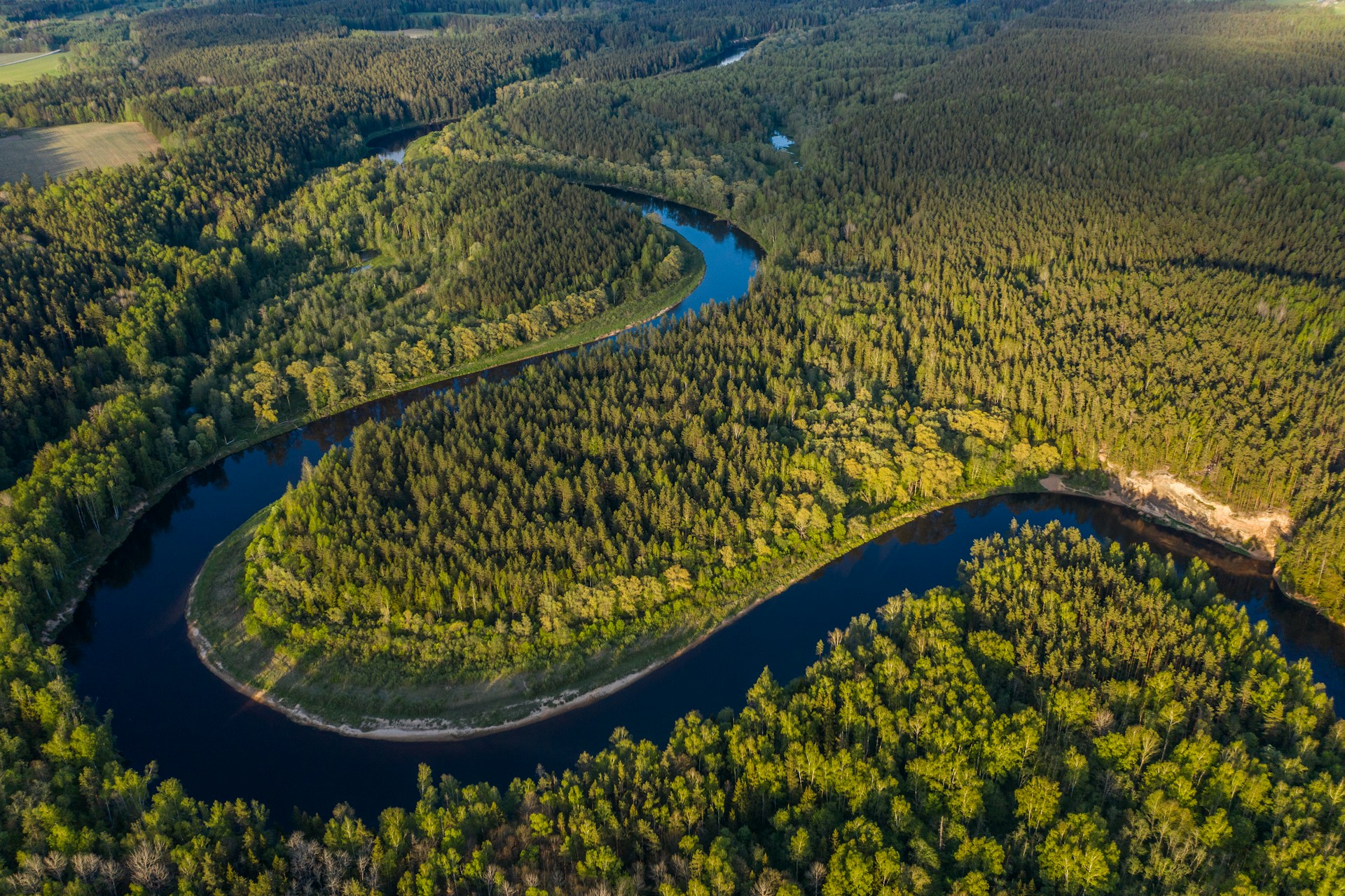
Life flourishes through relationship. For centuries, nature has quietly demonstrated this truth. Every thriving forest, every living river, every coral reef exists because countless relationships create the conditions for life to emerge, adapt, and flourish. Nothing thrives in isolation. Life is sustained through connection.
Increasingly, science is revealing that the same principle governs us. A recent study published in the Proceedings of the National Academy of Sciences found that people who experience more chronically difficult relationships, what researchers termed "hasslers," show measurable signs of accelerated biological aging. Each additional relationship characterized by persistent strain, hostility, or emotional burden was associated with a faster pace of biological aging and an increase in biological age beyond a person's chronological years.
That finding deserves far more attention than it has received. Because it reveals something extraordinary. Relationships are not simply emotional experiences. They are biological environments. That is the central insight of Relational Ecology.
The Ecology Within Us
When we hear the word ecology, we usually think about forests, oceans, wetlands, or wildlife. But ecology is fundamentally the study of relationships. It explores how living systems influence one another and how the conditions they create determine whether life flourishes or declines.
The human body operates according to the same principle. Every interaction becomes part of our internal ecology. A relationship filled with trust, respect, curiosity, and belonging sends one set of signals through the nervous system. A relationship filled with unpredictability, blame, hostility, or chronic tension sends another.
Our biology responds accordingly. Stress hormones rise, inflammation increases, immune systems grow less efficient, and recovery slows. The body quietly adapts to the environment it inhabits.
The remarkable insight from this research is not simply that difficult relationships create stress. It is that our bodies literally incorporate those relationships into the biology of who we become. The ecology around us becomes the ecology within us. Our relationships become part of our physiology.
Leadership Is an Ecological Force
If our biology is shaped by the quality of our relationships, then leadership is no longer simply a business function. It is a biological intervention.
For generations, leadership has largely been understood as directing people toward results. Nature suggests a different model. A gardener cannot command a seed to grow. A forester cannot order a forest to flourish. Neither creates life. They cultivate conditions: healthy soil, adequate light, water, biodiversity, balance. Life responds. Leadership works the same way. Leaders do not create flourishing. They create, or undermine, the conditions from which flourishing emerges.
Every forest tells the story of the conditions that shaped it. Every river reflects the landscape through which it has traveled. Every organization reveals the quality of the relationships it has cultivated.
Consider how a leader responds when a team misses a critical deadline. In a depleted relational ecology, the response is immediate blame and public scrutiny, triggering a cascade of cortisol. In a flourishing relational ecology, the response is curious and collaborative. The leader asks what broke down in the system rather than who is at fault. The work still gets addressed. Accountability still matters. But the human being is not diminished in the process.
Every organization is, in reality, a living ecosystem. Its culture is not merely a collection of values posted on a wall. It is its relational climate: the environment people inhabit every day through every conversation, every meeting, every decision, every conflict, and every moment of recognition or neglect. That relational climate shapes biology. Biology shapes behavior. Behavior shapes culture. Culture shapes performance.
Psychological Safety Is Biological Safety
For years, leadership scholars have championed psychological safety because it improves innovation, collaboration, and learning. Those are important outcomes. But this research suggests something even more fundamental. Psychological safety is biological safety.
When people feel emotionally secure, respected, and valued, their nervous systems regulate more effectively. They think with greater clarity: more curious than defensive, more creative than reactive, more courageous than fearful. They recover from setbacks more quickly and build genuine resilience.
The opposite is equally true. When people exist in environments marked by chronic criticism, uncertainty, humiliation, or relational conflict, their bodies remain in a state of vigilance. Over time, vigilance becomes wear. Wear becomes disease. The invisible culture of an organization gradually becomes visible in the health of its people.
The Myth of the Difficult Person
Organizations often ask, "Who is the difficult person?" Nature asks a better question: "What conditions keep producing difficult relationships?"
Foresters rarely blame individual trees. They examine the health of the entire ecosystem. Is the soil depleted? Has the water changed? Have the conditions themselves become hostile to life?
Leadership deserves the same curiosity. Most workplace conflict does not arise because people wake up determined to make life miserable for one another. It emerges when fear replaces trust. Competition replaces collaboration. Blame replaces accountability. Silence replaces honesty. Disconnection replaces belonging. The issue is rarely one difficult person. It is a relational ecology that has become unhealthy.
Every Leader Shapes Human Biology
This may be one of the most profound responsibilities of leadership. Leaders do far more than influence engagement scores or organizational performance. They shape the biological environments in which people spend thousands of hours of their lives.
A dismissive comment may last only seconds. Its physiological impact may last much longer. A moment of genuine listening may seem insignificant. Its effects can ripple through a person's nervous system, confidence, relationships, and decisions for years. Every interaction becomes part of the ecology another human being carries home.
Leadership is never neutral, and its effects compound. The nervous systems we shape today become the organizations and the societies we inhabit tomorrow.
Compassion Is the Architecture of Healthy Systems
Compassion is often mistaken for kindness without accountability. Nature reveals something richer: healthy ecosystems depend on reciprocity, balance, adaptation, mutual support, and repair.
Compassion is not the absence of standards. It is the presence of conditions where truth can be spoken without fear, where accountability can occur without humiliation, where conflict can become growth, and where people can remain fully human while doing meaningful work.
Compassion is not soft. It is structural. It is part of the architecture that allows life to flourish.
A New Measure of Leadership
Perhaps we have been measuring leadership too narrowly. Revenue matters. Strategy matters. Execution matters. But an even deeper question belongs alongside every leadership dashboard: what kind of biology is our culture producing? Are people becoming healthier? More hopeful? More connected? More resilient? More fully alive? Or are they slowly carrying home invisible burdens that no spreadsheet will ever capture?
That is the question of Relational Ecology. It recognizes that every organization is more than an economic system. It is a living ecosystem. Every leader is more than a manager of work. They are a steward of relational ecology. Every relationship is more than an interaction. It is part of the environment in which human lives unfold.
Nature has always understood this. Now science is beginning to confirm it. Life flourishes through relationship, and the quality of those relationships shapes the quality of our organizations, our communities, our health, and ultimately, our humanity.
Leadership, then, is not simply about achieving extraordinary results. It is about becoming a careful steward of the relational ecosystems that make extraordinary lives possible.
Because every leader leaves behind more than a legacy. Every leader leaves behind a living ecosystem. The question is not whether people will be changed by it. The question is how.