
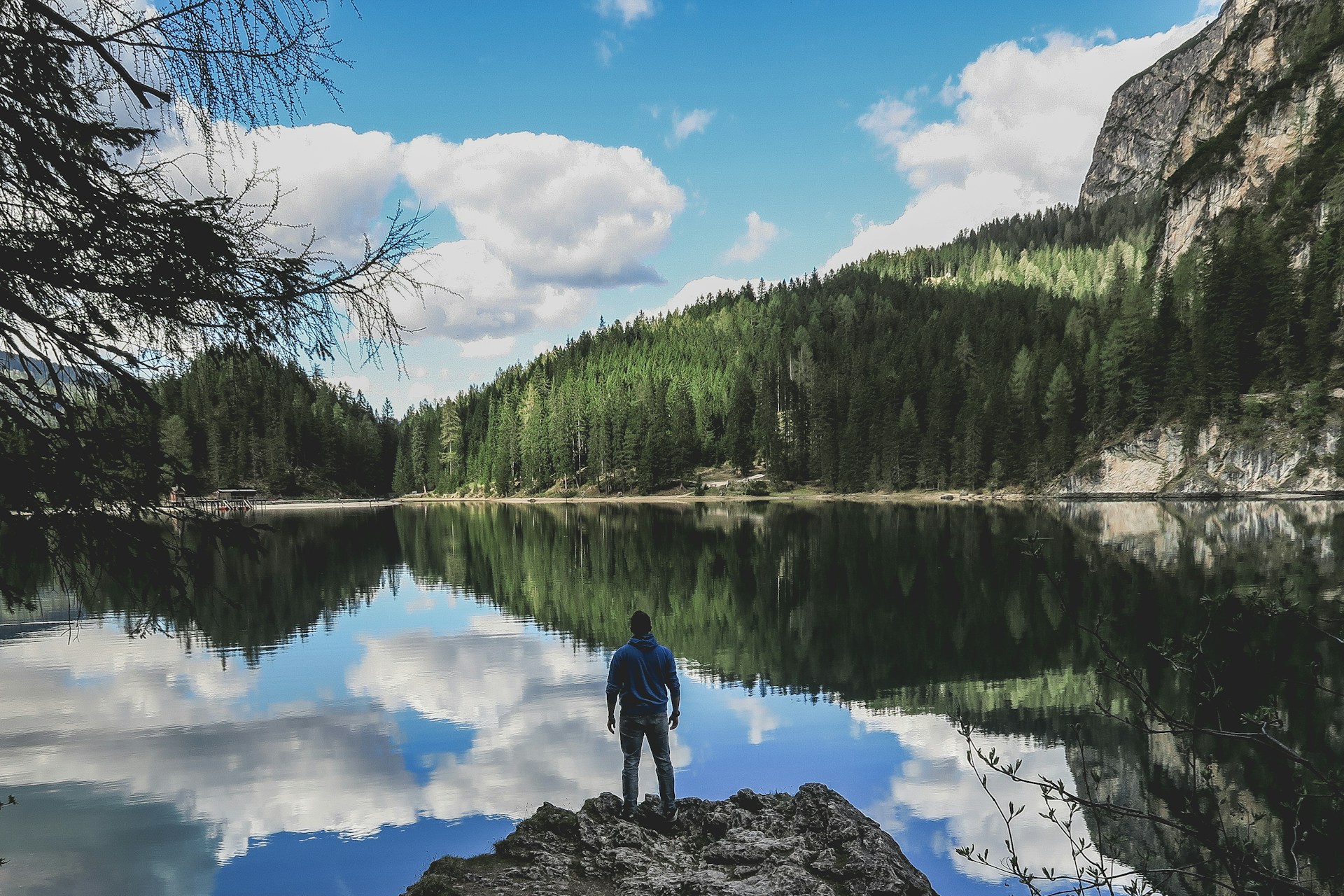
If you look closely at a thriving old-growth forest, you won't find a manager. There’s no central authority telling the roots where to dig or the canopy when to spread. Yet, it’s one of the most highly functioning systems on the planet. It thrives not because it’s controlled, but because the environment allows it to.
We need to stop treating our companies like machines and start treating them like this.
For generations, we’ve viewed organizations through a mechanical lens. We talk about "human resources," "organizational charts," and "optimization." We design systems as if companies were engines that could be fine-tuned just by swapping out parts or tweaking a process.
But organizations aren't machines. They’re living ecosystems.
Every workplace has its own emotional weather. Teams develop patterns of trust or paranoia, curiosity or fear. Ideas spread through a company much like nutrients move through soil. Energy is either renewed or depleted. The unseen currents of culture shape almost every visible outcome.
Leadership Begins with Conditions
Your job as a leader isn't to force the system into submission; it’s to tend to it. You can’t pull on a seedling to make it grow faster—you’ll just rip it out of the ground. The best leaders I’ve worked with understand that you can't mandate courage or creativity. You can only build an environment where people feel safe enough to be creative, brave enough to take risks, and connected enough to do the hard work.
Many leadership models start by asking how to motivate people. The better question is why the motivation died in the first place.
When a team struggles, our instinct is to add another initiative, a new incentive program, or a layer of oversight. We try to solve human problems with mechanical fixes. But a struggling forest isn't healed by yelling at the trees to grow faster. Restoration starts with the soil, the water, the sunlight.
People don't usually lack potential; they lack an environment where that potential can actually survive. They flourish when they are trusted rather than suspected. They need to feel like they are working toward a purpose, not just hitting a productivity quota. Give them autonomy instead of micromanagement, and psychological safety instead of fear, and watch what they do.
Before asking, "How do I motivate my team?" it helps to ask: What conditions have I created that are either nourishing or draining the people I'm supposed to be leading?
Culture Is the Invisible Ecosystem
You can't find culture on an org chart. It exists in the invisible space between people. It lives in what gets celebrated and what gets ignored. It’s in the conversations people have after the Zoom call ends, and whether a mistake becomes a chance to learn or a reason to point fingers.
Culture isn't something you announce at an all-hands meeting. It’s something you create, whether you mean to or not. Every interaction builds the environment. Every decision teaches people what actually matters.
When leaders try to mandate a change in behavior without shifting the underlying culture, it never sticks. The team will smile, nod, and go right back to their old habits the moment the leader leaves the room. Behavior is just the symptom. The culture is the disease. If you want to change the fruit, you have to change the soil.
Trust Is the Lifeblood of Living Systems
Healthy ecosystems depend on exchange. Water moves, nutrients circulate, roots communicate. Trust is the invisible current that lets human systems do the same.
Without it, people shrink. They protect themselves, manage their appearances, and hide their mistakes. An exhausting amount of human energy gets wasted on self-preservation instead of actual work.
Trust changes the math. It makes people willing to experiment, ask dumb questions, and pitch ideas before they're fully baked. People often mistake trust for softness, but it’s not. Healthy forests have boundaries, and healthy organizations have standards. Accountability without trust creates fear. Trust without accountability creates complacency. You need both.
Trust grows through small, unglamorous practices. It’s just keeping your promises. Admitting when you're wrong. Listening before you judge. Protecting people's dignity when they mess up. Choosing honesty over looking good.
Presence Shapes the Environment
Long before you influence a team with strategy, you influence them with your presence. Human beings are incredibly sensitive to the emotional weather of a room. Within seconds of walking into a meeting, your team is running a silent risk assessment: Is it safe to speak up here? Is my boss actually listening, or just waiting for their turn to talk? Do they actually care about me, or just my output?
Leadership is never emotionally neutral. Every leader creates weather. Some bring anxiety wherever they go, shrinking the confidence of everyone around them. Others bring possibility. The best leaders have a specific gift: people leave their presence feeling more capable and curious than when they arrived. They don't need to be the brightest light in the room. They just need to make sure the room is well-lit.
Psychological Safety and the Soil of Innovation
Nothing good grows in poisoned soil, and ideas are no different. Innovation requires vulnerability. Learning means admitting you don't know the answer. When fear runs the show, people stop experimenting. Eventually, they stop thinking out loud, and then they stop thinking altogether.
Companies often think they have an innovation problem when they actually have a safety problem. Psychological safety doesn't mean everyone agrees. It just means disagreement is productive. It turns difficult conversations into shared learning instead of personal attacks. Growth requires discomfort. The only question is whether your team experiences that discomfort as an invitation to grow, or a warning to hide.
Great Leaders Grow Forests
Insecure leaders want to be indispensable. Great leaders want to be unnecessary.
They look at their teams and ask: Who is emerging? Whose gifts are being ignored? What potential is just waiting for a little encouragement instead of another performance review?
Leadership reaches its peak when success isn't measured by how much power you've accumulated, but by how many people you've made capable of leading themselves. You aren't building followers. You're building other builders.
The Legacy of an Illuminator
Modern business obsesses over growth, but growth alone doesn't mean a company is healthy. Cancer grows. A forest regenerates. One expands by consuming; the other by renewing.
Every leader needs to step back occasionally and ask a few simple questions:
- Are people more confident because they work with me?
- Does my presence bring energy to the room, or drain it?
- Are we just hitting targets, or are we actually building something that matters?
- Will this team be healthier because I was here?
These questions shift the focus from short-term achievement to long-term legacy. Leadership is about standing in the middle of the crowd, doing the work alongside them.
Because organizations, just like forests, become what we repeatedly give them. Feed them fear, and they contract. Feed them control, and they just comply. But give them trust, dignity, and purpose, and they flourish. You aren't building a machine; you're growing an ecosystem. Your legacy isn't the monument you leave behind, but the thriving, capable people you leave behind to keep the work going.